Teaching + Tutoring

I love teaching, and no matter what I have pursued, I have found myself back to it in some form or another. Sometimes I think of the act and profession as a sort of Rosetta Stone: the person who loves and wants to do it will find a way to make it work even if that means learning a new language. She will use “Teaching” as the key to decoding the other media (whether it’s a literal new language or a new form of engaging with the work).

Currently, I run my own consulting and tutoring company, “The Human Element Education”, and I work in-person and remotely with students of all ages on their writing across disciplines in English, their interpretation of text (also across disciplines and modes), and their studies of Spanish or history. Please reach out to me if you would like to work, as a student or as a person or organization in need of instructional and learning design or the application thereof or with help designing your / their own.

Why “The Human Element”? I do not use artificial intelligence in my own writing, editing, or curriculum / curricular design and can help you work independently of it as well as recognize when it is and is not used in context and when it is and is not useful and appropriate. Moreover, this is human-to-human work in an increasingly technologically-oriented and isolated world where that connection is ever rarer and more precious.

I have spent nearly 15 years working in the classroom as an educator of English, writing, Spanish, journalism, yearbook, health, and creative writing at various independent schools and non-profits including Harvard-Westlake, The Urban Media Foundation, Milken Community School, Brentwood School, and The Bishop’s School. I have taught and advised grades 7-12, designed all of my courses, and used the Harkness and Socratic Seminar methods around a table and with desks in addition to a rows-of-desks format. I have taught with and without technology and in person, online, and in a hybrid format.

I have tutored privately for 20 years, doing so, as previously mentioned, for students of all ages for English, writing, history, Spanish, standardized tests, college- and graduate school-admissions essays, middle- and high school-essays (admissions-related and curricular) and grammar.

Please reach out if you seek support in those areas!

In addition to course instruction, I have overseen schools’ student editorial staffs, their non-fiction magazines, newspapers, news magazines, yearbooks, senior books, and supplements. As mentioned, I have worked as an advisor to students grades 7-12, student and family affinity groups, and served on numerous committees and panels.

Among the classes I have designed, I have offered various iterations of English grades 8-12: “Myth, Magic, and Folklore in Literature” grades 11-12, “Sheroes: Lady Heroes in Myth and Legend” grade 12, “Creative Writing” grades 8 and 12, “Marginalized Voices” grade 12, “Journalism” grades 9-12, “Yearbook” grade 9-12, “Pagan Studies” (co-taught with a colleague in the history department and including harp lessons with those of literature and writing) for grade 11, “North American Literature” grade 11, “British Literature” grade 10, “Literature & Composition” grade 9, “Analytical Writing Across Modes” grade 9 and 10, and “Modes of Expression” grade 10, and comparative literature grades 9-12.

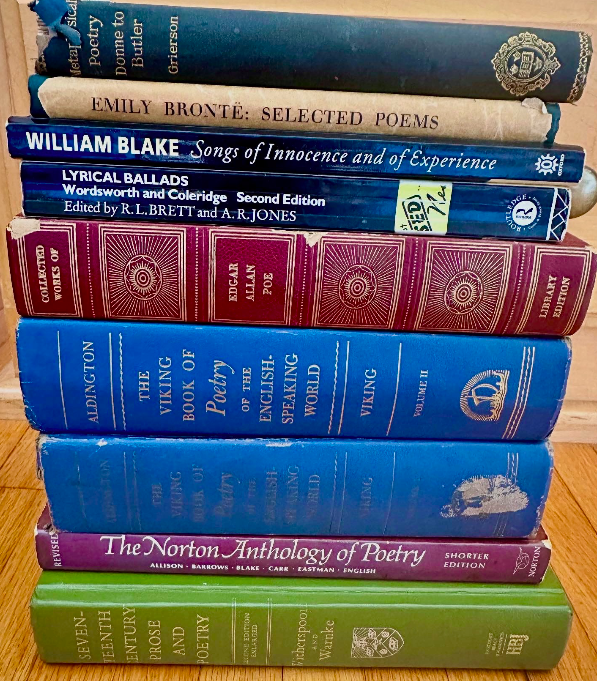
I have taught works from around the world and across time and guided students through their expression, analytical and creative, poetic and in prose.

A strong believer in interdisciplinary teaching- and learning, I encourage students to make connections to other media and disciplines, and I do so in my teaching, myself, using music, context, history, etymology, other languages, science, math, film, and visual art in my courses. I have long written music to literary passages and retelling core stories and themes within texts, and I have brought my music into my classroom, in person and online, to make the works come alive for my students in new and very old ways and to encourage them to take ownership of the texts, themselves.

At their best, these works help us understand what it means to be human (something so at stake right now), and further comprehending and interacting with them creatively enhances that intellectual and visceral understanding.

Students have shared they enjoy experiencing these literary pieces in their original form but with a contemporary twist. Additionally, pupils of mine have, as a class, written fantasy novels, cookbooks, and short story collections, and, individually, harp and ukulele songs, raps and choreographed dances, comic strips and paintings, and emulation writings, in addition to other styles of works.

In 2019 and in person, I spoke and performed at SXSW Edu with a talk titled, “Teaching the Bardic Tradition as a Bard.” I have also presented at the Associazione Europea di Musica e Comunicazione’s virtual 2020 conference (which recently released a book and album that includes my prose-related and musical work), and the New Chaucer Society’s 2021’s virtual expo and conference, where I sang and spoke and submitted a portfolio of written materials. It was there I performed my original 12 minute retelling of “The Wife of Bath’s Prologue and Tale” (“The Wife of Bath: Alysoun’s Tale”) for the first time. That fall, I presented about that story and song at Argentina’s Universidad Nacional de Cuyo and wrote an article about teaching literature with and via music for teaching journal, Pedagogy and Profession.

A believer in collaboration, I have enjoyed mentoring and being mentored by and working, co-teaching, and even playing in a band with colleagues over the years.

Like most teachers, I love being a student and continue to take classes, myself. I have recently taken classes on updated instructional design for our contemporary educational needs, grant writing, and copy writing. Additionally, in my years as an educator, I have also done professional development at Cambridge University, UCLA, UCSD, Bard College, Santa Monica College, Cal State Long Beach, DailyOm, Udemy, Mind Body Green, Associazione Europea di Musica e Communication, The New Chaucer Society, and USC, as well as other institutions.

Current Tutoring: I work as a tutor on a sliding scale (and I offer discount packages) for English, writing, Spanish, and history, online and with students elementary school-aged to adult. Please reach out to inquire.

Below, you can see and listen to a Spotify playlist of original music I have written to works of literature or retelling their stories.


These Songs Comprise the Playlist. All share original music, some original lyrics, others excerpts from literary texts, a few a hybrid of the two. If you do not use Spotify, know that you can also find them on other streaming platforms like Apple, Amazon, Tidal, Deezer, Pandora, and YouTube.

  1. The Weaver (As Above) — the alchemical “As Above” to Herbs and Flowers’ “So Below”. This original harp-voice-driven song (media nearly as ancient as it comes) incorporates Greco-Roman, Chinese, Norse, Middle-Eastern, and medieval mythology and imagery into a piece about storytelling, itself. It features such figures as Athena, Arachne, Penelope, Circe, Calypso, Nausikaa, Hera, The Fates / Morae, The Norns, Scheherazade, The Red String of Fate, witches, and painters like Remedios Varo. It is a fable and first appeared on “Old Wives’ Tales”.

  2. Gilgamesh — this original, guitar-voice-driven song retells the mortality-concerning fundamental aspect of the ancient oral epic. It imagines Enkidu’s speaking with Gilgamesh. It first appeared on “Bard”.

  3. Song of Achilles: My Name Shall Live Forever* — this original, harp-voice-driven song uses the original media from Homer’s Iliad to share a crucial passage about mortality that forms a synecdoche for the epic, Achilles’ perspective (and that of a classical “hero”’s), and the original “purpose” of the bardic tradition (to ensure legacy and immortality in the face of the human condition) at all. It first appeared as a single and on “Bard”.

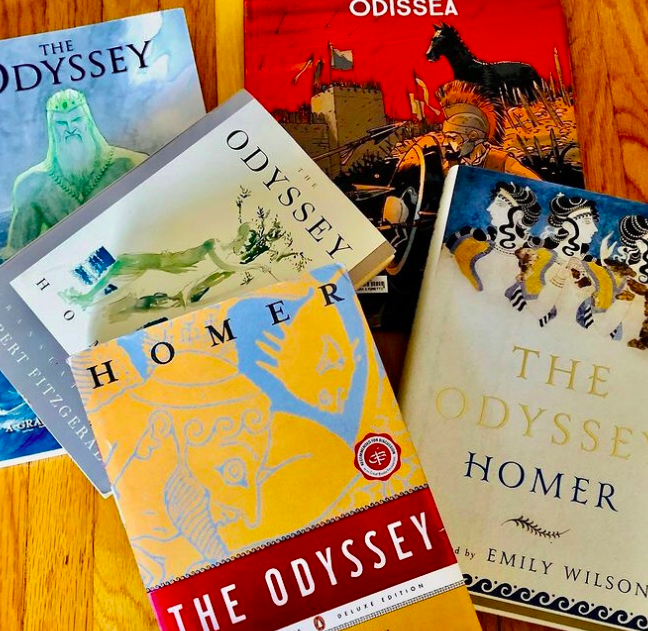
  4. I am Odysseus* — this original, a cappella song uses the original media from Homer’s Odyssey to share a crucial passage about mortality that forms a synecdoche for the epic, Odysseus’ perspective (and that of a classical “hero”’s) — rife with hubris and power — and the original “purpose” of the bardic tradition (to ensure legacy and immortality in the face of the human condition) at all. By design, it sounds like a call-and-response rowing song the sailor and his men would have sung on the high seas as well as a sort of shanty. The thumping you hear is my hitting a copy of Robert Fagles’ translation of the Odyssey. We used to sing this one in class before studying the work. Students made pins that said “I am Odysseus, son of Laertes”. It first appeared as a single and as the opener on “Bard”.

  5. Like Orpheus and Lot’s Wife — this original, guitar-voice-driven song draws from Ovid’s Metamorphoses character and that of the bible to talk about time and mortality. I wrote it during the beginning of quarantine in 2020. It first appeared on “Old Wives’ Tales”.

  6. Six Red Seeds of Persephone — this original, piano-voice-driven song retells the Greek myth that, in itself, is an allegory for time, change, and seasonality, and gives the heroine far more agency than did the original tale. It first appeared as a single and then on “Bard”.

  7. Herbs and Flowers, Things of Power (So Below) — this original, mandolin-voice-driven song forms the alchemical “So Below” to The Weaver’s “As Above”, about the earth’s magic as a complement to that of the mind and air. This piece draws from Egyptian, Greco-Roman, Norse, Arthurian, medieval European, Shakespearean, fantastical lore to tell stories of green witches while using the song as an allegory about magic, gender, power, credibility, and storytelling, themselves (calling upon Bastet, Artemis, Circe, Freya, The Lady of the Lake, Morgan le Fay, Ophelia, Aerin Fire-Hair, Moon Woman, Coriel Halsing, and others). It first appeared as a single and then on “Old Wives’ Tales”. The guitar-voice-driven version is out as a single, and the keyboard-music box, instrumental version closes out “Six Winter Waltzes”.

  8. Cassandra No More (Goodbye to All That) — this original, piano-voice-driven song retells the story of the prophetic priestess from Homer’s Iliad and uses her tale as a personal fable while also alluding to the work of Robert Graves and Joan Didion. It first appeared on “Time’s Cartographer”.

  9. Our House of Cedar and Fir — this original, piano-voice-driven song sets music to excerpts from the bardic Song of Songs and The Book of Ruth (from Hebrew Scriptures) in addition to adding a few lines as well. It first appeared on “Bard”.

  10. The Golden Bough — this original, guitar-voice-driven song uses Aeneas’ journey into the underworld (from Virgil’s Aeneid) as both a synecdoche for his perspective, the view of the epic, and a fable for other insights on change, transformation, and death and rebirth. It first appeared on “Hinterlands”.

  11. Beowulf’s Counsel* — this original, harp-voice-driven song uses the original media from Beowulf to share a crucial passage about mortality that forms a synecdoche for the epic, Beowulf’s perspective (and that of a medieval and Old English-speaking Viking “hero”’s), and the original “purpose” of the bardic tradition (to ensure legacy and immortality in the face of the human condition) at all. It first appeared as a single and on “Bard”.

  12. True North (In Dreams Begin Possibilities) — this original, guitar-voice-driven song (which I would love to hear by an ‘80s hair metal band…) appeared, plot-wise in a dream, and it draws from Norse mythology and Viking imagery and lore to tell a story of a sailor’s journey while using it as a metaphor for not looking outside yourself for confidence in addition to functioning as a mini-bardic tale. It first appeared as a single and on “Awen (The Cauldron of Inspiration, Part II)”.

  13. When Gwion Bach Became Taliesin — this original, guitar-voice-driven song retells the Celtic tale of Gwion Bach who became the great bard, Taliesin, after drinking of the goddess Cerridwen’s cauldron of inspiration and she chased (in Protean manner), swallowed, and later gave birth to him, and tells a personally allegorical story akin to that of a kunstlerröman (the growth of an artist — think of James Joyce’s The Portrait of the Artist as a Young Man as the quintessential example) of becoming a bard and ends with a coda from the English translation of the Welsh Book of Taliesin relating to the Welsh epic, The Mabinogion. It first appeared on “Awen (The Cauldron of Inspiration)”. Awen is Welsh for bardic inspiration. The album collects lore from cultures the world and history over.

  14. The Wife of Bath: Alysoun’s Tale — I originally wrote this 12 minute ‘60s-style guitar-voice-driven folk ballad (which pays homage to a troubadourial style) for The New Chaucer Society’s Expo Conference. It retells “The Wife of Bath’s Prologue” and “The Wife of Bath’s Tale” from Sir Geoffrey Chaucer’s The Canterbury Tales (though it also pays homage to Sir Gawain and The Green Knight) but intends to show how these arguments relate directly to today’s discussion of gender, power, and agency. It first appeared as a three-song-single (the prologue song, the tale song, and the combination of both) and in full as a closing to “Bard”. I later wrote about it and its relationship to the many ways I incorporate music into my teaching in an article for Pedagogy & Profession.

  15. Morgan le Fay — this original, guitar-voice-driven song reworked my more linear telling of the Arthurian Morgan’s story in “The Song of Morgaine” and made it more personal, abstract, and allegorical. It also alludes to the philosophy of Lao Tzu. It first appeared on “Awen (The Cauldron of Inspiration)”.

  16. King Once and Future (The Sword in the Stone) — this original, piano-voice-driven song focuses on the eternal aspects, Monist elements of the Arthurian legend (also as seen in Geoffrey of Monmouth’s History of the Kings of Britain, Sir Thomas Malory’s Le Morte D’Arthur, Lord, Alfred Tennyson’s Idylls of the King, John Steinbeck’s Noble Acts of King Arthur and his Knights, and T.H. White’s The Once and Future King and The Book of Merlyn) about this “forever king” who will return to save a beleaguered world. It is a fable and first appeared on “Time’s Cartographer”.

  17. Guinevere by Moonlight — this original, piano-voice-driven song retells the Arthurian legend of the queen in a moment of crisis and, intending to further humanize her, from her perspective. It first appeared on “Hearth Song (The Cauldron of Inspiration)”.

  18. Robin & Marian — this original, ‘60s-style guitar-voice-driven song draws from legends of the folk hero and his lady, as well as the Child Ballads that sing of them, and is about love. It first appeared on “Awen (The Cauldron of Inspiration, Part II)”.

  19. Lady Macbeth: Come, You Spirits* — this original harp-voice-driven song sets original music to Lady Macbeth’s soliloquy from William Shakespeare’s The Tragedy of Macbeth. It first appeared on “Bard”.

  20. Tomorrow and Tomorrow and Tomorrow — this original, guitar-voice-driven song sets original music to Macbeth’s fatalistic, nihilistic, mortality-discussion-driven soliloquy from William Shakespeare’s The Tragedy of Macbeth. It first appeared on “Old Wives’ Tales”.

  21. The May Queen: Spring in Bloom — this original, piano-voice-driven song draws from Celtic, Norse, and medieval European mythology about Beltane and the coming of Spring to talk about seasonality and that change. It opens “Hearth Song (The Cauldron of Inspiration)”.

  22. Hvalr — this original, piano-voice-driven song draws from Old Norse mythology and the Icelandic Sagas (the Poetic Eddas and Prose Eddas) to talk about the great whales of the sea. It first appeared on “Hearth Song (The Cauldron of Inspiration)”.

  23. The Mermaid — this original song has three iterations: the first, mandolin-voice-driven, the second, piano-voice-driven, the third, guitar-voice-driven. Each has a very different corresponding mood and flavor, and the first opens “Awen”, the second’s closing “Hearth Song”, and the third’s forming the penultimate track of “The Lost Album: By Land And Sea, In Flight With Me / Thee”. It is a sea shanty that draws from Celtic and Norse lore in addition to 16th-19th c. seafaring imagery to tell a story of love and nature.

  24. Oranges and Lemons (say the Bells of St. Clement’s) — I wrote a melody to this song in fifth grade after seeing this nursery rhyme in a book. It first appeared on “Bard” as a guitar-voice-driven pieceand uses the London’s time-sharing bells as a sonic, conceptual, and thematic motif. It first appeared on “Bard”.

  25. Seventh Son of a Seventh Son — this original, guitar-voice-driven song draws from Celtic and medieval European folklore to share a fable about superstition, tales of those born with a caul, magic, Othering and outcasting, and the act of prophesying. It first appeared on “Awen (The Cauldron of Inspiration, Part II)”.

  26. Oh, my Love is Like a Red, Red Rose — this original, piano-voice-driven song sets music to Robert Burns’ poem of the same name. It first appeared as a single and on “Bard”. In instrumental form, it appeared on “Sylvan Soul”.

  27. The Cloud — this original, piano-voice-driven song sets music to Percy Bysshe Shelley’s poem of the same name. It first appeared on “Hearth Song (The Cauldron of Inspiration)”.

  28. She Walks in Beauty — this original, guitar-voice-driven song sets music to Lord Byron’s poem of the same name. It first appeared on “Awen (The Cauldron of Inspiration, Part II)”.

  29. The Catskill Eagle* — this original, guitar-voice-driven song sets music to a passage from Herman Melvill’s Moby-Dick. It first appeared as a choral single that wove in loon and eagle calls and in a different form on “Bard”. I wrote it in honor of a late department chair and mentor.

  30. Hope is the Thing With Feathers* — this original, harp-voice-driven song sets music to Emily Dickinson’s poem of the same name. It first appeared on “Bard”.

  31. Thy Branches in December (In Drear-Nighted December) — this original, mandolin-voice-driven song sets music to John Keats’ poem of the name in parenthesis. It first appeared on “Time’s Cartographer”.

  32. Sudden Light — this original, ‘60s-style guitar-voice-driven song sets music to Dante Gabriel Rossetti’s poem of the same name. It first appeared on and opened “In the Deep and Dazzling Darkness”.

  33. The Starry Night Shall Tidings Bring — this original, ‘60s-style guitar-voice-driven song sets music to Emily Brontë’s poem of the same name. It first appeared on “In the Deep and Dazzling Darkness”.

  34. By the Light of the Moon (The Setting Sun) — this original, piano-voice-driven song sets music to John Clare’s poem of the same name. It first appeared on “In the Deep and Dazzling Darkness”.

  35. The Sun Descending in the West (Night) — this original, ‘60s-style guitar-voice-driven song sets music to William Blake’s poem of the name in parenthesis. It first appeared on “In the Deep and Dazzling Darkness”.

  36. I Wandered Lonely as a Cloud — this original, piano-voice-driven waltz sets music to William Wordsworth’s poem of the same name. It first appeared on “In the Deep and Dazzling Darkness”.

  37. Hymn to the Night — this original, piano-voice-driven waltz sets music to Henry Wadsworth Longfellow’s poem of the same name. It first appeared on “In the Deep and Dazzling Darkness”.

  38. A Dream Within a Dream — this original, ‘60s-style guitar-voice-driven song sets music to Edgar Allan Poe’s poem of the same name. It first appeared on and closed “In the Deep and Dazzling Darkness”.

  39. Crossing the Bar* — I wrote this song in 9th grade after reading the poem in Anne’s House of Dreams. I later taught it. This original piano-voice-driven song sets music to Alfred, Lord Tennyson’s poem of the same name, one about mortality and that he asked to always close each of his collections. It first appeared on “Bard”.

  40. Ulysses: ‘T Is Not Too Late To Seek A Newer World (Ulysses)* — I first wrote this for a class after a moving personal experience outside of school. It sets my keyboard-voice-driven music to Alfred, Lord Tennyson’s reimagining of the Latinate Odysseus — Ulysses — as an old man’s facing the end of his life and regaining his vigor for one, last adventure. It first appeared on “Bard”.

  41. Lord Alfred’s Siren (The Mermaid) — this original, piano-voice-driven song sets music to Alfred, Lord Tennyson’s poem of the name in parenthesis. It first appeared on “Hearth Song (The Cauldron of Inspiration)”.

  42. Josephine March — this original, mandolin-voice-driven folk song uses the protagonist and plot of Louisa May-Alcott’s Little Women as a fable. It first appeared “Old Wives’ Tales”.

  43. Christina’s Wishes, in Christina’s Words (When I am Dead, my Dearest) — this original, piano-voice-driven waltz sets music to Christina Rossetti’s mortality-concerning poem of the name in parenthesis. It first appeared on “Six Winter Waltzes”.

  44. Hear, Sweet Spirit — this original, monastic-sounding, guitar-voice-driven song sets music to Samuel Taylor Coleridge’s poem of the same name. It first appeared as a single.

  45. The North Wind — this original, piano-voice-driven song draws from Norse, Slavic, and Inuit folklore to talk about love. It first appeared on “Time’s Cartographer”.

  46. The Ballad of Maude and Connor — this original, guitar-mandolin-driven folk song draws from Irish folklore to talk about love. It first appeared as a single and then on “Awen (The Cauldron of Inspiration, Part II)”.

  47. Herne and his Love — this original, piano-voice-driven song draws from Celtic folklore to talk about seasonality, the winter holidays, and the passage of time. It first appeared on “Time’s Cartographer”.

  48. Cathedral — this original, guitar-driven folk song pays homage to Raymond Carver’s story of the same name as a fable. It first appeared as a single and then on “Illuminations”.

  49. Beneath the Willow Tree — this original, guitar-voice-driven and piano-voice-driven folk song draws from Celtic, Chinese, Norse, and personal mythology to talk about love. It first appeared as two singles and then, respectively, as an opener to “Time’s Cartographer” and on “The Lost Album: By Land And Sea, In Flight With Me / Thee”.

  50. Coming soon: Jane Eyre — this original, piano-voice-driven song uses Charlotte Brontë’s novel, Jane Eyre, as a fable, and uses an intentionally 19th c.-style Romantic waltz-style to evoke the book’s time period. It will appear on “Being, Becoming” and “Being, Becoming + Synths”.

*I first played these in the classroom.

Several other of my released songs with literary allusions (this is not a complete list): Time is a Place; The Far Field (Hiraeth); I’m out With Lanterns, Looking for Myself; The Three-Sided Coin; Squaring the Circle; The Five-Petaled Rose; The Way of the Pilgrim / On The Camino; And There’s Ivy At The Gate; Stay Mine, Keens the Sailor; Song of the Selkie; The Fisherman; The Figurehead; A Love Greater Than Time; The Lake of Dreams*; Jolene Must Speak; When Seamus Went Digging, And I Wore Pearls in my Ears; In a Time of Lockets, a Time of Lace; Row me to Shore (Anne and Gilbert); The Over-Soul; The Green Man; Walden in the Spring; Vivian’s Song; Midnight Wings; Kairos; The Lady in the Forest; And Yonder is the Moon; Peregrine’s Secret Compass; The Wild, Craggy Peaks of Forever (Here be Dragons); Bluebird (Uncharted Territory); The Song of Morgaine; Strictly for the Birds; The Flight of the Kestrel; Nostos Algos; Fair Janet and Sweet William Edward, etc.

This playlist does not include the nearly 20 traditional folk songs and their numerous versions and iterations (e.g., For the Beauty of the Earth; Greensleeves; The Skye Boat Song; By the Bonnie Banks o’ Loch Lomond; She Moved Through the Fair; Scarborough Fair; The Turtle Dove (Fare Thee Well); Hares on the Mountain; Let no Man Steal Your Thyme; Willy o’ Winsbury / Willie o’ Winsbury), public domain pieces, and ancient prayers I have orchestrated (e.g., Hatikvah and Bach’s Prelude in C), interpreted, and shared and various to which I have set my own melodies (e.g., Mi Chamocha; Lecha Dodi; La Serena in its Ladino; Sesonot Ze’eereem and She Moved Through the Fair; Bonny Barbara Allen) or to which I have added additional words (e.g., Hares on the Mountain; Wayfaring Stranger) or those that hybridize the extant with the new in terms of melody, lyrics, or both (e.g., Dónal Óg; Tam Lin; The Oak and The Ash and The Bonny Ivy; Scarborough Fair (The Elfin Knight)), nor does it include songs that do not relate to teaching texts or that are covers of others’ works.